
What’s Under Wolf Lake? The Ground, the Lead and the Permits
Renderings show a gleaming waterfront dome in Northwest Indiana. The research behind this series maps an industrial “layer cake” underground, estimates a $100M+ foundation premium, and flags federal wetland rules that could favor the Bears’ dry land in Arlington Heights.
After Indiana enacted Senate Enrolled Act 27 in February 2026 to establish a $1 billion public infrastructure framework and the Bears called Hammond their “sole focus” (Aug. 13), soil testing began in late June at the Wolf Lake Terminals site west of I-90. The Bears say they are still finalizing due diligence across two Wolf Lake-area sites (Nov. 6). The question: the ground beneath a century of Calumet heavy industry can support a modern NFL stadium.
No boring results are public. The research models what the ground likely holds: slag, refinery fill and peat over bedrock, compared with the Bears’ 326-acre Arlington Heights property (bought for $197.2 million), which the research describes as stable clay. Every figure below marked “research” is the research’s estimate, not a published engineering result.
Drilling Through the Wolf Lake “Industrial Layer Cake”
The research says a standard shallow foundation won’t do the job here. Scroll through its modeled 110-foot profile to trace how each subterranean layer escalates structural cost and cross-border hydrological exposure.
The $197.2 Million Clay Shield vs. Sinking Millions in the Mud
Every dollar spent stabilizing Wolf Lake’s subsurface is capital that buys zero seats, zero suites, and zero fan amenities. Compare both sites side by side and stress-test how caisson depth and regulatory delays shift project exposure.
| Subsurface Parameter | Wolf Lake (Hammond, IN) | Arlington Heights (IL) |
|---|---|---|
| Site Profile | Industrial brownfield along I-90 & adjacent Lost Marsh footprint | 326-acre former Arlington Park upland campus ($197.2M purchase) |
| Soil Composition | Steel slag heaps, refinery hydrocarbons, compressible organic peat | Clean, dense, native upland glacial clay |
| Foundation Type (Research) | Deep concrete caissons & heavy steel piles (60–110 ft to bedrock) | Standard shallow spread concrete footings |
| Geotechnical Premium | $100M+ volatile CAPEX overrun | $0 geotechnical cost premium |
| Settlement Risk | Extreme — unconsolidated slag & peat (“wet sponge” compression) | Minimal — uniform load-bearing native clay |
| Wetland & CWA 404 Risk | High — protected wetlands & Section 404 LEDPA review | Zero wetland impact (dry upland parcel) |
| Primary Bottleneck | Subsurface chemistry, EPA Region 5 & USACE permits | Cook County tax fight ($124.7M Board of Review value; about $8.9M a year) |
Interactive Ground-Risk Stress Test (Research Scenario)
Toggle the site and adjust the research’s assumptions. This is a planning model, not an engineering estimate.
In this research scenario, 90 ft caissons with a 200 ppm lead benchmark put eight figures of cost risk in the ground before vertical steel begins.
The Cost of a Decimal Point: Tightening Lead Limits & Ecological Liability
Northwest Indiana is not a regulatory free pass. The research uses EPA’s soil-lead screening levels as planning benchmarks (it isn’t confirmed which levels IDEM would apply at Wolf Lake), and models a 10-to-15-year recovery horizon if lakebed sediments are disturbed.
Soil & Groundwater Lead Thresholds (EPA vs. IDEM)
In June 2025, EPA set new cleanup levels at the Town of Pines coal-ash site: 200 ppm for lead, 25.2 ppm for arsenic and 1.62 ppm for thallium, and said previously ineligible properties would be re-evaluated. Cleanup numbers move, and budgets move with them.
The Ecological Cascade & 15-Year Biological Clock
Step 1: Dormant Heavy Metals Mobilized in Lakebed
Dredging, shoreline work, and deep caisson vibration suspend legacy zinc, copper, lead, and PAHs from anaerobic sediments directly into the Wolf Lake water column.
The Clean Water Act Section 404 LEDPA Question
Environmental law does not merely ask whether a developer can mitigate a wetland; it asks whether the project must disturb the wetland at all. Click through the questions the U.S. Army Corps of Engineers asks on an individual permit. This is a simplified explainer: no Section 404 application for Wolf Lake is public.
How Soil Borings Became a Multi-State Negotiation Weapon
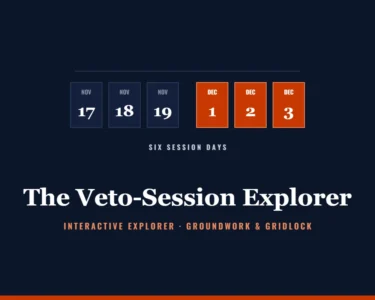
With soil testing under way and Illinois weighing a stadium-authority bill for the Dec. 1–3 veto session, the research lays out three strategic paths and one tail risk it calls the “Double-Rejection Trap.” These are the research’s scenarios, not known Bears plans.
Path A: Commit to Hammond & Absorb Subsurface Volatility
The research’s Path A: the team commits to the Wolf Lake area and absorbs the research’s estimated 60–110 ft caisson premium, lead cleanup and wetland mitigation credits in exchange for Indiana’s roughly $1 billion under SEA 27.
Primary Vulnerability: Section 404 LEDPA review that may favor the dry site, plus the research’s cross-border cleanup scenario.
Indiana moved fast: HEA 1292 (2025) and SEA 27 (Feb. 2026). The South Shore Line’s Monon Corridor branch opened March 31, 2026, though no stadium rail link has been announced. Illinois’ sticking point was Arlington Park’s taxes: the Cook County Board of Review set the land at $124.7M (about $8.9M a year), while the Bears appealed for $60M (about $1.7M). A tentative 2024 deal with the village and school districts eased the bill but not the long-term uncertainty.
Indiana’s roughly $1B would be repaid by a 1% food-and-beverage tax in Lake and Porter counties (still needing local votes by mid-2027), Lake County’s hotel tax rising from 5% to 10%, a 12% Hammond ticket tax and district tax capture. Regional spillover for Crown Point, Winfield and LOFS is a forecast, not a fact, and public debt carries the risk if construction stalls.