CreativeTech Studio · Groundwork & Gridlock

The Chicago Bears stadium fight, audited

Indiana wrote about $1B into law. Illinois has a stadium-authority plan on the clock. The Bears own 326 acres in Arlington Heights and are doing due diligence on two Wolf Lake sites. Six deep dives, four interactive explorers and four videos sort what’s confirmed from what’s still hype.

6

Deep dives

4

Interactive explorers

Dec. 1–3

Illinois veto session

Status check · as of Nov. 27, 2026

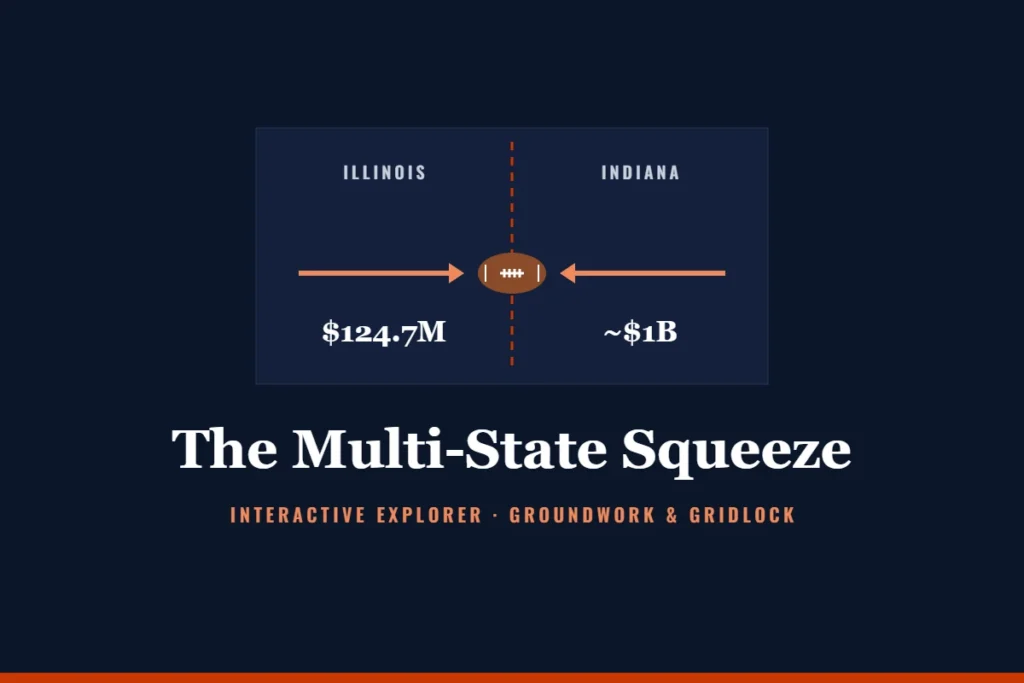
The Bears said Nov. 6 they’re still “finalizing due diligence details across two sites in the Wolf Lake area” and “appreciate the recent engagement from Illinois leadership to explore legislation.” Illinois’ veto session opened Nov. 17 without a stadium vote; lawmakers return Dec. 1–3, when a stadium-authority bill could come up. Indiana’s SEA 27, signed in February, already creates the Northwest Indiana Stadium Authority with about $1B in public money.

This box is updated after each milestone.

Six deep dives

Read the series

Start with the politics and finish with the money, or jump to the angle you care about. Each article ends with a research desk: the slide deck, a downloadable report and the podcast.

Politics & transit

Indiana wrote its offer into state law while Springfield ran out the clock. That made the threat real. It didn’t end the game.

Due diligence

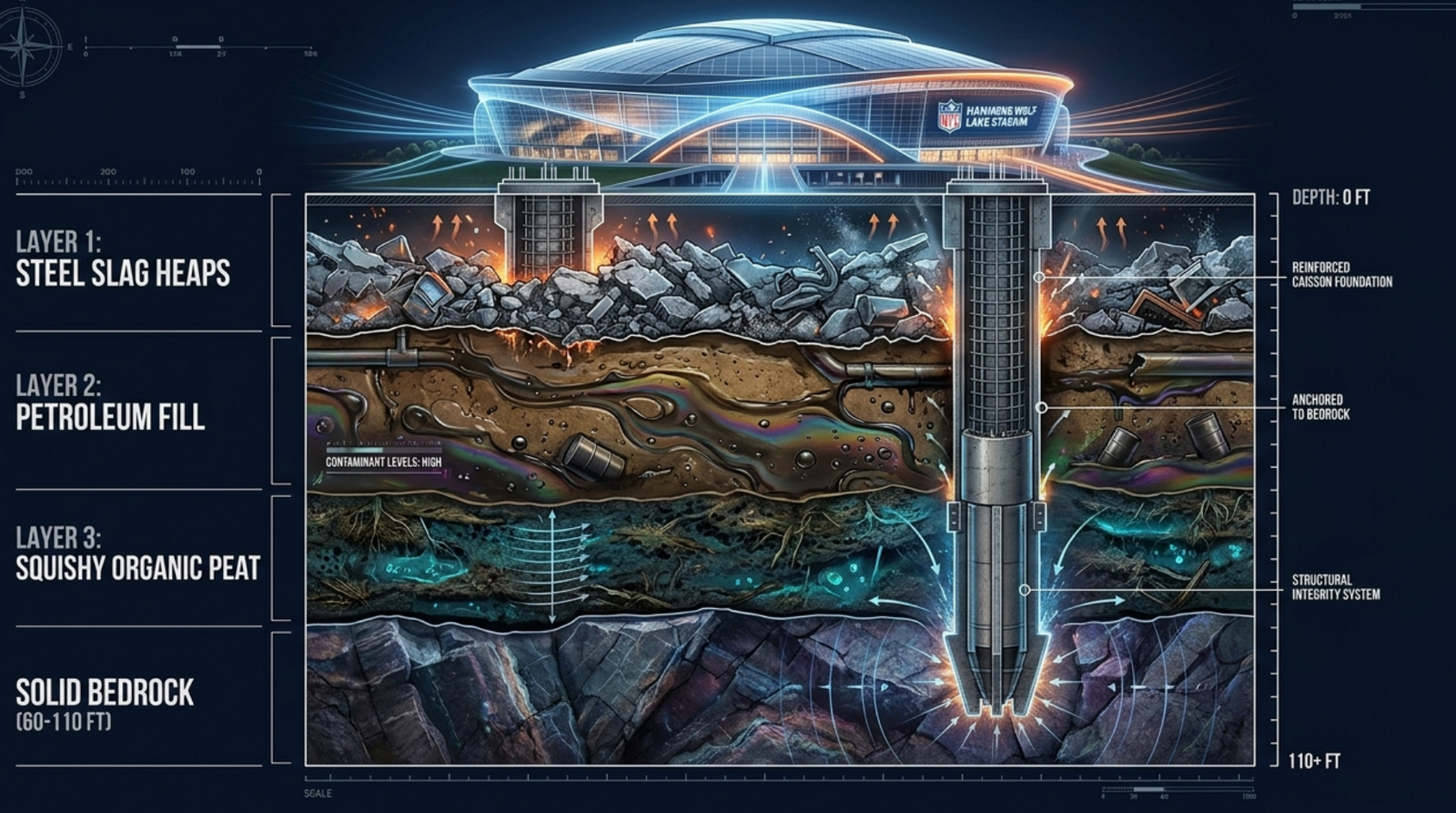
Drill rigs cost real money. Before anyone calls Hammond a bluff, look at what the Bears actually did on the ground.

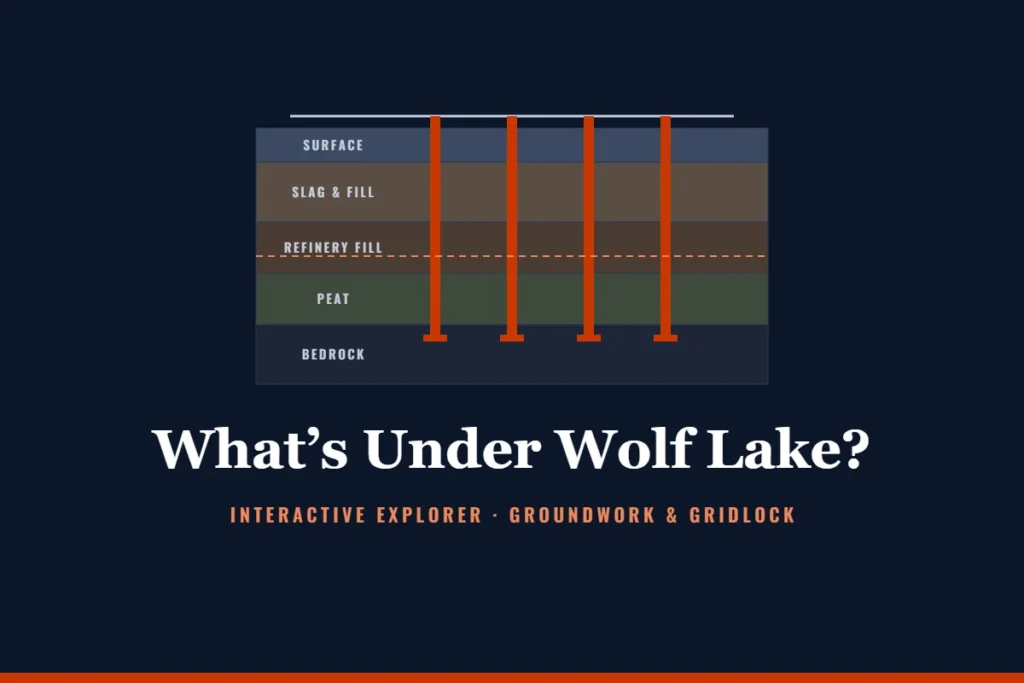
Soil & permits

The politics said go. The ground may have other ideas, and federal water law gets a say too.

The leverage

A tax fight, a $1B offer and a hard patch of dirt gave the Bears leverage in two states. Now Springfield gets its shot.

The veto session

The NFL and the Bears are back at the table with Illinois lawmakers, and Indiana’s governor is signaling his patience has limits.

The money

Arlington Heights, Hammond, Illinois’ stadium-authority plan and South Works: what each costs the team, and what each hands them for free.

Interactive

Explore the data yourself

Four interactive explorers built from the research. Change the inputs, compare the sites and see where the numbers come from.

Soil, lead & permits

The research’s soil model, its foundation-cost estimate, EPA lead benchmarks and the federal wetland test.

Two-state leverage

How a Cook County tax fight turned into a two-state squeeze: Arlington’s taxes, Indiana’s roughly $1B package and the research’s three paths.

Dec. 1–3 timeline

How Illinois got back into the race, what its proposed stadium authority would do and what’s at stake in the veto session.

Side-by-side

Arlington Heights, Hammond, the stadium-authority plan and South Works, compared on land, money, taxes and risk.

Watch

The series on YouTube

Short explainers built from the decks and the podcast. Each description links back to its article.

How the Bears squeeze two states

A Cook County tax fight became a two-state standoff.

What each stadium site costs the team

Every finalist ends with a public owner and a long lease.

What's under Wolf Lake?

The ground under Hammond, the research says, is the hard part.

How Illinois got back in the game

From “sole focus” on Hammond to a Springfield goal-line stand.

How to read it

Facts, research and my read

Confirmed facts carry a source: “per ABC7,” “the Bears said Nov. 6.” Research figures without a public source, like the caisson depths and the foundation premium, are labeled as the research’s. Opinion is labeled “My read.” Scenarios are the research’s scenarios, not a known Bears plan.

Who wrote it

Stephanie Black

Urban planner, infrastructure analyst and Northwest Indiana native from Crown Point. I commute into downtown Chicago on I-90 and the South Shore Line, so I’ve got a stake on both sides of the state line.

Built by CreativeTech Studio · All Chicago Bears posts
An independent analysis, not affiliated with the Chicago Bears, the NFL, or the states of Illinois or Indiana.