
The Multi-State Squeeze: How the Bears Played Two States
Why a franchise holding 326 dry, unencumbered acres in Arlington Heights started soil testing on Indiana industrial land, and how a $124.7M Cook County tax value, Indiana’s $1B SEA 27 package, and federal wetland rules collide at the goal line.
Set by the Cook County Board of Review: about $8.9M a year in taxes. The Bears appealed for $60M (about $1.7M a year).
About $1B in public money through the Northwest Indiana Stadium Authority, repaid by local taxes and district tax capture.
The research’s estimate for 60–110 ft caissons through slag, refinery fill and peat to bedrock.
Purchased for $197.2M in 2023. Owning dry land gives regulators strong grounds to favor it over Wolf Lake wetlands.
A Tax Fight Froze Arlington Heights. Illinois Answered With a Public-Ownership Plan
To understand why Chicago Bears President and CEO Kevin Warren declared Hammond, Indiana the team’s “sole focus” in August 2026, follow the property tax ledger in suburban Cook County. In 2023, the franchise paid $197.2 million in cash for the 326-acre former Arlington International Racecourse—a wetland-free upland campus served by Metra rail, slated for a $5 billion mixed-use district anchored by over $2 billion in private equity.
That plan stalled over taxes. The Cook County Assessor reset the land to about $197 million in 2023, and the Board of Review set it at $124.7 million, a bill of about $8.9 million a year. At the Bears’ $60 million appeal it would be about $1.7 million. A tentative Nov. 2024 deal with the village and school districts eased the bill but not the long-term uncertainty. In spring 2026 the House passed a megaprojects tax bill (78–32) that died in the Senate, and the Senate passed a stadium-authority bill (37–17) the House never voted on.
In early November, NFL Commissioner Roger Goodell, Chairman George McCaskey and Kevin Warren met Illinois legislative leaders. The plan now on the table: a town creates a stadium authority that owns the stadium, the Bears pay to build it, public money goes to roads and infrastructure, and there is no property tax. No bill text is public yet.
Developer Related Midwest pitched a domed stadium at the former U.S. Steel South Works site on the Southeast Side, reported at 200 to 440 acres, as a partnership with the Bears. The Bears haven’t endorsed it.
Arlington Heights Tax & Deal Architecture Explorer
FIG 1.1Switch between the stalled Cook County tax-assessment dispute and Illinois’ November 2026 Public Stadium Authority counter-offer.
Indiana Passed $1 Billion in Infrastructure Law—Directly Over an Industrial Layer Cake and a Federal Legal Tripwire
Where Springfield stalled, Indianapolis executed at sprint speed. Building on House Enrolled Act 1292 (2025, authored by Rep. Earl Harris Jr. and passed by the Indiana Legislature), Governor Mike Braun signed Senate Enrolled Act 27 (SEA 27) in February 2026—creating the Northwest Indiana Stadium Authority and about $1 billion in public money repaid through a Professional Sports Development Area (PSDA) and new local taxes. The authority would buy the land and own the stadium, with a Bears lease of 35+ years. The South Shore Line’s Monon Corridor branch opened March 31, 2026, but no stadium rail link has been announced.
The research flags two hidden costs: a scenario where tax collections trail debt payments, and an estimated $100M+ foundation premium on contaminated ground, plus federal permitting exposure. Indiana’s own analysis projects about $60M a year in stadium-related taxes.
Research Scenario: Indiana Tax Stack vs. Debt Payments
FIG 2.1The research’s scenario: $45M–$55M a year in receipts against an estimated $60M–$62M in debt payments. These are unconfirmed research figures; Indiana’s analysis projects about $60M a year.
Research scenario gap: -$16.0M/yr ($45M receipts vs. a $61M midpoint). Funding: a 1% food-and-beverage tax in Lake and Porter counties ($12M–$18M a year per Indiana’s fiscal note, still needing county votes by mid-2027), Lake County’s hotel tax rising from 5% to 10%, a 12% Hammond ticket tax and district tax capture. A $700M Toll Road payment could also help.
Wolf Lake Subsurface & “Hydraulic Piston” (Research Model)
FIG 2.2Select a geological stratum or engineering feature below to inspect physical constraints, IDEM/EPA thresholds, and CAPEX impacts.
Surface Wetlands & The Federal LEDPA Gatekeeper
Under Clean Water Act Section 404, non-water-dependent projects must prove no Less Environmentally Damaging Practicable Alternative (LEDPA) exists. Because the Bears already own 326 wetland-free acres in Arlington Heights, the U.S. Army Corps would have strong grounds to favor that dry site. The presumption can be rebutted, and no Section 404 application is public. IDEM would also need to grant Section 401 certification and wetland mitigation credits.
Mud, Clay, or Leverage Squeeze: Auditing the Bears’ Three Strategic Paths
Geotechnical due diligence transforms the stadium question from a geographic preference into corporate risk arbitrage. By quantifying the exact foundation premiums and regulatory tripwires at Wolf Lake, the Bears’ front office faces three distinct strategic routes—each carrying a different balance of capital exposure, federal permit risk, and political friction.
| Evaluation Factor | Path A: Proceed in Mud Hammond Wolf Lake (IN) |
Path B: Arlington Clay Retreat Arlington Heights (IL) |
Path C: Multi-State Leverage Squeeze Contract Arbitrage |
|---|---|---|---|
| Public Package | About $1B in public money (SEA 27), repaid by local taxes and district capture. The research’s scenario has debt payments ($60M–$62M) outpacing receipts ($45M–$55M). | Tax fight → proposed stadium authority (no property tax on a publicly owned stadium, infrastructure reported near $855M; no bill text yet, vote hoped for Dec. 1–3). | Maximized Both States: The research’s scenario: use Indiana’s enacted offer to press Springfield, while pressing Indiana for overrun protection. |
| Foundation CAPEX | $100M+ Premium Research estimate: 60–110 ft caissons and steel piles, plus cleanup costs that move with lead benchmarks. |
$0 Premium Stable native clay supports standard shallow foundations across 326 pre-owned acres ($197.2M sunk land). |
Seeks Public Protection Research scenario: ask Indiana to cover foundation and cleanup overruns before signing a lease. Not a known Bears demand. |
| Federal & State Permits | High Permit Risk: Section 404 LEDPA review that may favor the Arlington site, lead benchmarks of 200/100 ppm soil and 10 µg/L water (research), and the research’s cross-border plume scenario. | Zero Wetland Risk: Dry upland site bypasses CWA Section 404 and EPA Region 5 completely; standard municipal zoning and utility permitting only. | High Unless Hedged: Due-diligence data proves site risk; turns LEDPA and caisson numbers into a defensible off-ramp or public indemnification demand. |
| Game-Day Logistics | Strong Capacity: The Bears’ fan survey describes 15,000 tailgate spaces (Soldier Field has about 6,000), plus I-90 ramps. The Monon Corridor rail branch opened in March, but no stadium rail link has been announced. | Good to Excellent: 326-acre suburban campus with Metra rail and expansive parking, requiring suburban highway interchange upgrades. | Optionality Preserved: Uses active Wolf Lake drilling and board votes to keep both logistical corridors live until binding legislation passes. |
| Speed & Primary Risk | Slow / Schedule Risk: Possible EPA orders (worst case), penalties up to $25,000 per day per violation, and the research’s 10–15 yr recovery horizon. | Moderate / Tax Risk: Technically straightforward build once Cook County school-district payments and veto-session legislation clear. | Double-Rejection Trap The research’s tail risk: lose goodwill in Springfield while Section 404 review goes against Hammond, and the team could be left with neither state. |
Boardroom Arbitrage Stress-Test Simulator
Adjust the three active negotiation and regulatory levers to model net team exposure and identify the dominant strategic path.
Research estimate: deep caissons plus cleanup costs.
At the $124.7M Board of Review value (~$8.9M a year).
Section 404 LEDPA review and the research’s plume scenario.
Path C: Keep Both States in Play
In this scenario neither state has removed the team’s main blocker. The research’s Path C keeps Hammond in play to push for a Dec. 1–3 vote in Springfield while seeking overrun protection from Indiana.
The Double-Rejection Trap: How Overplaying Multi-State Leverage Risks Stranding the Franchise
Every game of multi-state chicken carries an asymmetric failure mode. The research names the worst case Double Rejection: pushing Illinois lawmakers too hard while relying on a wetland site in Indiana that faces tough federal review, and losing goodwill in Springfield just as Section 404 review goes against Wolf Lake. This is a scenario, not a prediction.
Maintaining “Sole Focus” Posturing Past the Negotiating Window
In the research’s scenario, the Bears keep Hammond active despite the estimated $100M+ foundation premium and lead benchmarks, and risk overplaying their hand. Gov. Braun’s office said in November “it is nearly time for the state to shift its energy and resources to the next opportunity.”
2023–2026 Multi-State Inflection Timeline
CHRONOLOGY-
2023–2025
Arlington Land Anchor & Tax Shock: Bears buy 326 acres for $197.2M (2023). The Board of Review later sets $124.7M (~$8.9M/yr tax); a tentative 2024 deal follows. Indiana passes HEA 1292 in 2025.
-
Feb–May 2026
Legislative Velocity vs. Gridlock: Gov. Braun signs SEA 27 ($1B infrastructure framework) in February; the Monon Corridor rail branch opens March 31 (no stadium link announced); the Illinois House and Senate pass different bills, and neither becomes law by May 31.
-
Aug 13, 2026
“Sole Focus” Pivot: Soil testing begins at Wolf Lake Terminals in late June; on Aug. 13 Kevin Warren calls Hammond the team’s “sole focus.”
-
Oct–Nov 6, 2026
The Leverage Works: Goodell, McCaskey and Warren meet Illinois legislative leaders. On Nov. 6 the Bears say they “expect productive dialogue with both leadership teams.” Related Midwest pitches South Works.
-
Nov 17–Dec 3
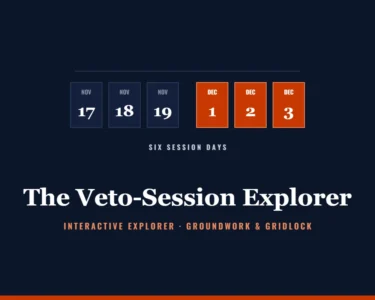
Goal-Line Veto Window: The veto session opened Nov. 17–19 with no vote; a floor vote is hoped for Dec. 1–3, while Indiana signals its patience has limits.
The Definitive Audit: Contract Arbitrage Requires Timely Closure
My read: Illinois’ November plan suggests the leverage worked, but worked isn’t won. Until a bill passes, the research’s scenario points to three guardrails for the front office.
Seek Indiana Overrun Protection
In the research’s scenario, before any binding Hammond lease the team would want Indiana to cover the estimated $100M+ foundation premium and cleanup overruns.
Protect the Arlington Upland Shield
Keep the 326-acre Arlington Heights land ready as the dry-ground fallback, where a stadium authority would remove the property-tax problem.
Execute Closure Before Dec 3
Close negotiations inside the November–December veto window. Prolonged multi-state posturing degrades goodwill in both capitals and heightens the risk of double rejection.